 Design guide
You can configure additional field settings apart from Default Values and Fields Formatting from the Design Mode, under Field Settings > Basic.
Setting fields to Not Empty indicates that the field value should not be empty. Fields with this attribute will be marked with a red asterisk on the upper left side of the field header.

Note: For Not Empty settings in a Subtable, please refer to this article.
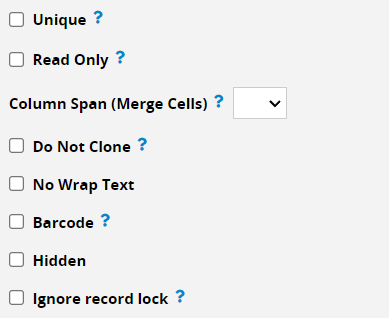
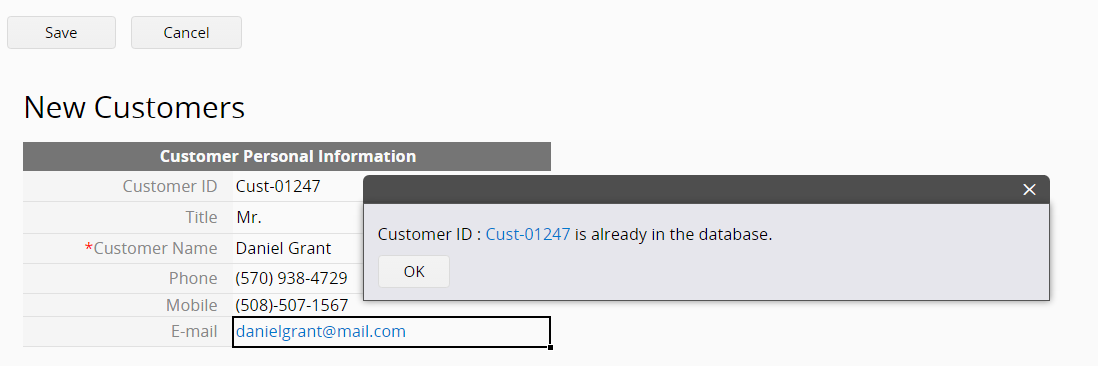
When you set a field as Unique, the value of this field cannot duplicate the same field's value in other records.
This feature is most useful when you want to make sure that you do not record the same data twice in your database, for example, a username, e-mail, or phone number.

With this configuration, when a user tries saving a record with the same value for a field marked as Unique, Ragic will not only prevent the record from being saved but also display a pop-up window with a link to the existing record.
You will see this option in Subtable field settings (different from the Unique attribute of "independent field" settings). Enabling this option will prevent users from entering duplicate Subtable field values within a record, while Subtable values in other records are not affected by this restriction.

When a field is set as Read Only, the value of this field cannot be manually edited.

This is useful for fields loaded from another sheet, fields referenced from another sheet, Auto Generate fields, or those with a Default Value.
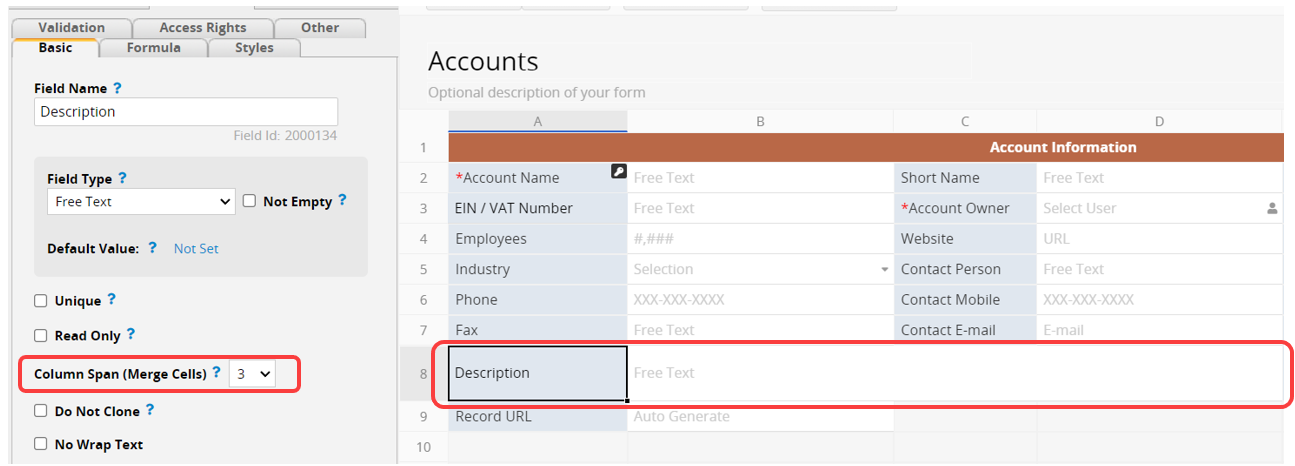
You can Merge Cells to span columns, making a single field look wider.

Merging cells differs from adjusting the height of a row or the width of a column.
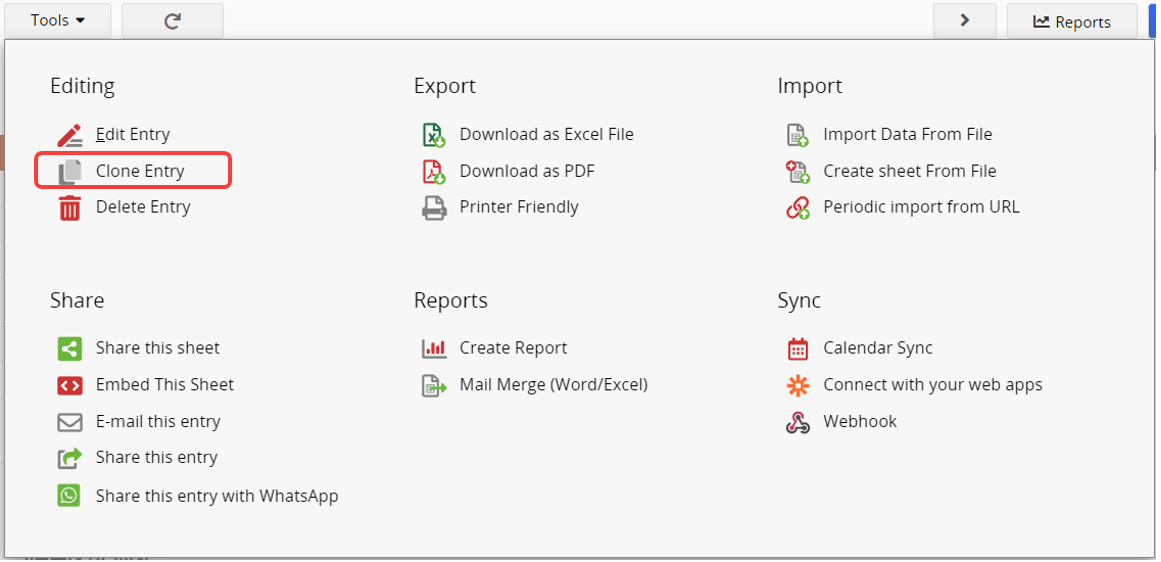
If you're creating many records with similar data, using Clone Entry can be more efficient than re-entering the data.
You can specify fields that should not be cloned by marking them as Do Not Clone.

When this configuration is set, the text in this field won't be wrapped.

If this option is not checked but the text still doesn't wrap, please refer to the Line-breaking rules.
Displays the value of this field as a Barcode (QR Code).


If you would like to generate other types of Barcodes, such as Code 128, you may use the Barcode field type.
When checked, this field will be Hidden in the following:
1. Sheet interface
2. Printer Friendly
3. Excel download (and related export options)
4. Web embed form

If a field doesn't need to be displayed to the user but its value is necessary, such as for constants or Formulas, you can set it as Hidden. When used within a Subtable, a Hidden field will create a gap. Therefore, it's recommended to move Hidden fields to the end of the Subtable.

Note: This setting only hides specific fields in the layout interface. The field data will still be displayed in the change history or record update notifications. Therefore, if you want to hide the field based on different user access rights, it is recommended to use Field Level Access Rights settings.
When this option is enabled, this field can still be edited after the record is locked.
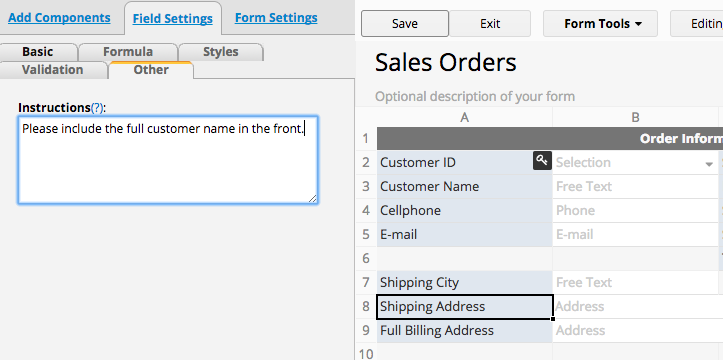
You can add the Field Instruction (supports BBCodes) to help users enter data into the field.
The configuration for Field Instruction can be found on the left sidebar under Design Mode > Field Settings > Other.
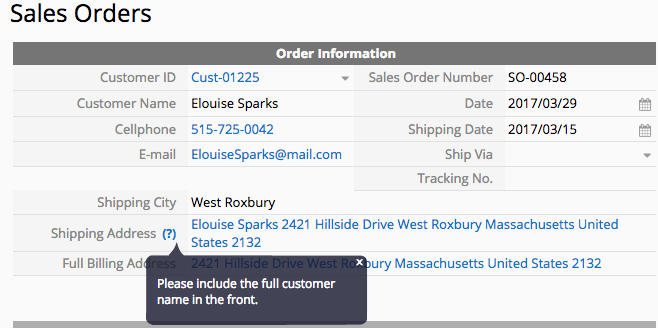
This will add a (?) to the field header, and your instruction will show when the user clicks on the (?).
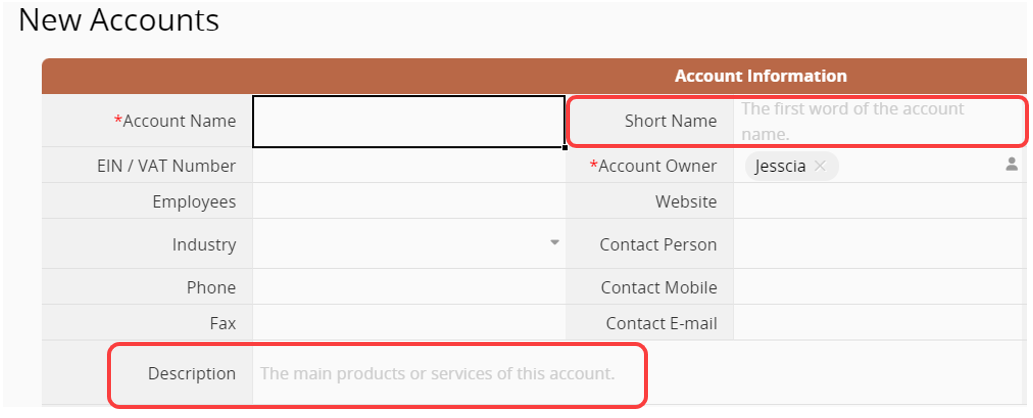
In addition to Field Instruction, you can also add a Placeholder to a field, which will be displayed directly in the field to assist users in entering data. The configuration for the Placeholder can be found on the left sidebar under Design Mode > Field Settings > Other.
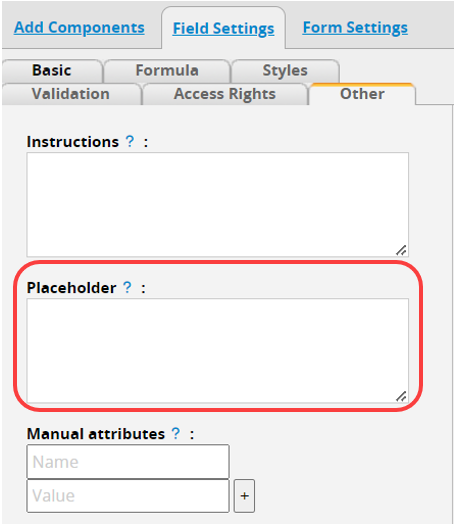
When the field is empty, the placeholder text will be displayed in gray to guide users to fill in the data correctly.
Note: Please do not use this feature unless instructed by Ragic support.
To add Manual attributes to a field, enter the Design Mode of the Form Page, select the field, and navigate to Field Settings > Other > Manual attributes on the left sidebar.
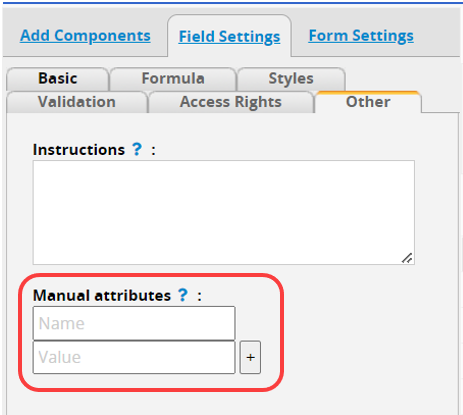
After entering your parameter into the Manual attributes configuration, click the + button next to it.
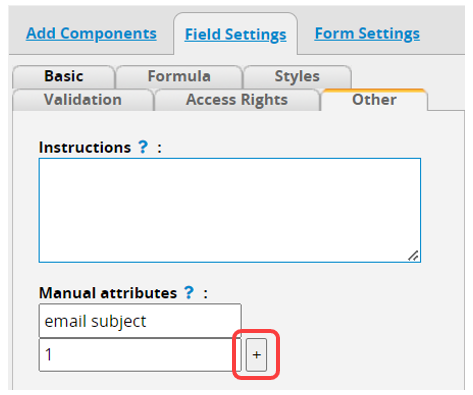
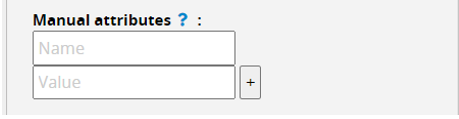
You might notice the entered parameter is now cleared, which means it has been added to the field.
Don't forget to Save before exiting.
To remove an attribute, simply add an empty attribute value and the attribute will be removed.
 Thank you for your valuable feedback!