
Material return is the process in production management where issued materials are returned back to the warehouse. It is a critical step in ensuring that the system’s recorded inventory value is properly reconciled with the actual physical inventory on-site.
In factories without a strict material return system, leftover materials often become what is known as “shop floor inventory.” Although these materials are still physically inside the factory, because they were never returned to the warehouse, the system assumes they have already been consumed. This creates two major problems: First, the warehouse may appear out of stock but no replenishment is made, leading to material shortages in the next production run. Second, production costs become artificially inflated, because the costs of those unused materials are still fully counted toward that production batch.
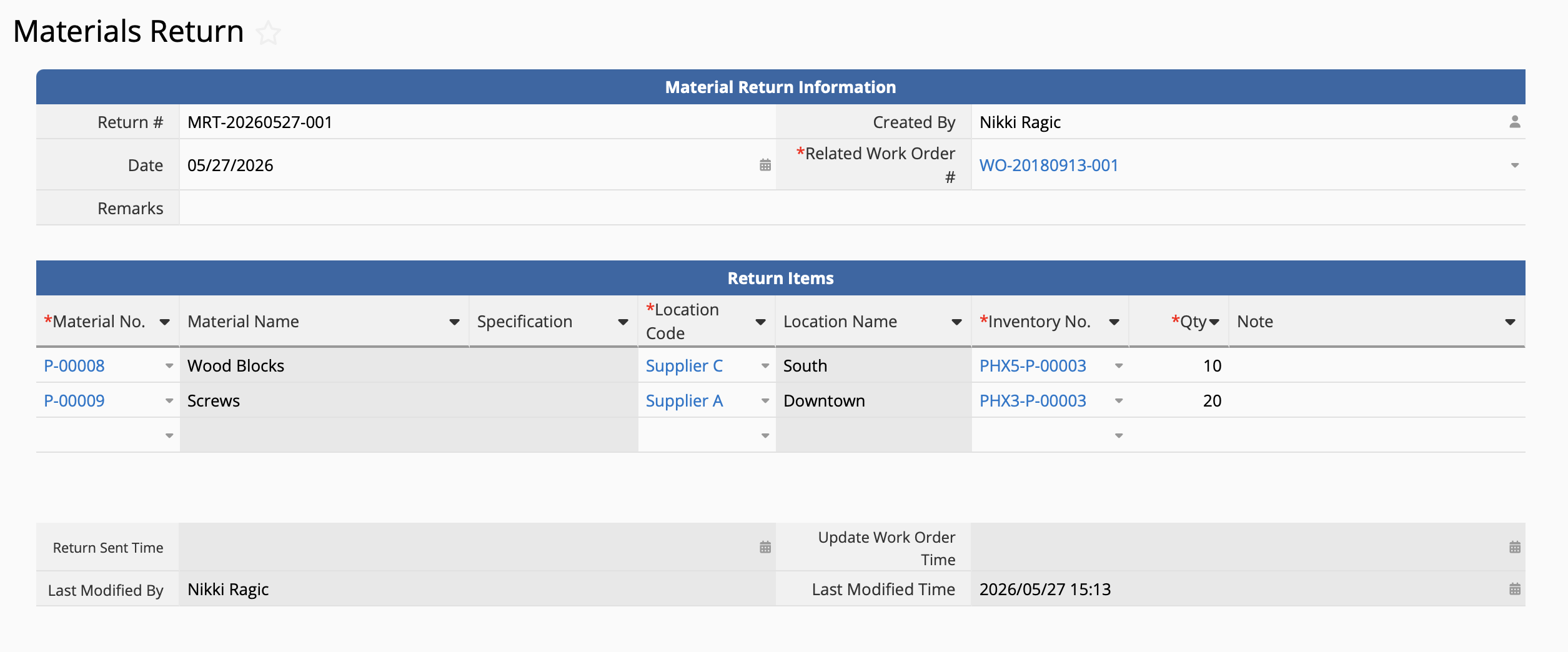
Let's say you run a furniture factory. If you receive an order for 40 solid wood chais, the Work Order may show that you need to purchase 20 wood blocks, 320 screws, and 0.8 gallons of varnish. However, various situations may arise during production:
1. Order or Work Order Changes
After accepting the order, the customer might suddenly call and change their order, stating that they only need 20 chairs instead of 40. This means half of the purchased materials are no longer needed. If they are not returned to the warehouse, the wood, screws, and varnish may be damaged due to certain environmental conditions such as humidity, rendering them unusable for future projects. By returning the materials to the warehouse, businesses can ensure proper storage conditions and reallocate materials to subsequent orders.
2. Production Interruption
For example, if the cutting machine suddenly breaks down while manufacturing chairs, the wood blocks that were issued must be returned to the warehouse through the material return process, and the machine failure must also be recorded on the work order.
3. Discovery of Material Defects
Let's say the production staff discovers that some of the wood blocks brought from the warehouse are damp or heavily molded. The factory should not simply discard them. Instead, they should follow the material return process and mark these materials as "defective." This way, warehouse management will be notified that these wood blocks were not wasted but rather faulty material. This loss should be recorded against the material supplier or warehouse management, rather than against the factory's production efficiency.
Most importantly, the return process allows the company to track exactly how much material is required for each product in the long run, which provides meaningful financial insights.
The formula for production management is: Actual Material Issued - Returned Material = Actual Material Consumed. Without material returns, we would assume that making these 40 chairs truly required the entire volume of materials, even when they didn't. Buying too much materials and using too little will lead to an accumulation of dead stock in the long term.
After raw materials go through the material return process, their status is changed from “semi-finished goods” back to “raw materials.” If the return is due to defects, the status should instead be updated to “pending inspection” or “defective goods.”
This reconciliation mechanism serves as the final line of defense for maintaining inventory accuracy. In a well-managed factory, there may not be many material return records, but each return represents a corrective management action. It reflects the gap between planning and reality, while also providing valuable data for optimizing future bills of materials (BOM) and inventory planning.