
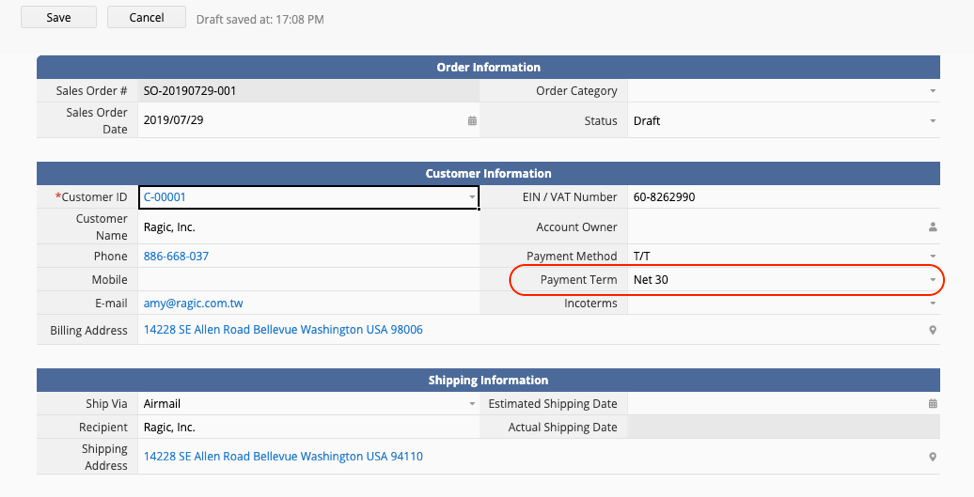
Monthly settlement is a common payment term in which a business consolidates a month's transactions and settles them all at month-end, then completes payment within an agreed number of days. For example, "Net 30" means all transactions for the month are settled at month-end, with payment due within 30 days of that settlement date.
In practice, when a business works with a regular supplier over the long term, it typically doesn't pay for each purchase individually. Instead, transactions accumulate over the month and are settled together at month-end, with payment following agreed terms (such as Net 30 or Net 60). The same applies on the sales side—B2B customers are often given net payment terms, allowing them to pay within a set credit period rather than settling each transaction immediately.
This payment approach is common in long-term business relationships. It simplifies reconciliation and gives businesses greater flexibility in managing cash flow.
The specific net terms used typically depend on company size, the nature of the business relationship, industry norms, and each party's negotiating power.
1. Simplifies Reconciliation and Payment Processing: Consolidating multiple transactions into a single month-end settlement reduces the workload of paying and reconciling each transaction individually.
2. Improves Cash Flow Flexibility: Businesses can defer payment within the agreed period, supporting better fund management and operational planning.
3. Supports Long-Term Business Relationships: Net payment terms are typically built on trust and stable partnerships, helping maintain strong supplier and customer relationships.
In ERP or financial systems, monthly settlement is typically configured as a payment term used to manage receivables, payables, and account settlement. Businesses can schedule their monthly accounting processes based on net payment terms, for example:
By using an information system, businesses can standardize their net payment term rules, making account settlement and payment processing more consistent while improving the predictability of overall cash flow planning.